Recital Videos: Who Keeps the Money, Studio or Videographer?
By MediaZillaUpdated
Free migration offer
Move your Vimeo On Demand library to MediaZilla in 14 days - or we pay you $1,000.
$8,124 or $2,225. That is the gap in what a dance studio keeps from the same $12,000 recital video season, depending on one contract clause. Here are the three common splits, the math on each, and the four things to agree in writing before rehearsal.
$8,124 or $2,225.That's the gap in what a dance studio keeps from the same $12,000 recital video season, depending on one contract clause.
Studios and videographers rarely write the deal down. Then the money arrives and nobody agrees who gets it. Here are the three common splits, the math on each, and what to put in writing.
Why Is the Recital Video Money Always Murky?
Because three jobs blur together. Someone films the show. Someone sells the video. Someone answers when a parent can't find it. Studios often assume the videographer handles all three. Videographers often assume the studio sells and shares.
Videographers on forums like DVinfo have asked how to handle recital video distribution for years. The question hasn't changed. Only the delivery has, from DVDs to a single link.
What Are the Three Common Deals?
1. The Studio Hires, Pays a Flat Fee
The studio pays the videographer a set price, say $3,000, and sells the video to families. The studio takes the upside and the risk. This is the simplest deal. It suits studios with 200 or more families.
2. The Videographer Sells, Pays the Studio a Share
The videographer films on spec, runs the sales, and pays the studio a percentage for access to the stage and the families. Here we use 20%. This puts the risk on the videographer and works when they already have a platform.
3. A Straight Split
Both sides share sales 50/50. Fair on paper. It needs clear rules about who pays the platform and who answers parents.
How Do the Deals Pay Out on $12,000?
Same recital season as always. 300 families buy at $40. That's $12,000. Take off $876 for the MediaZilla plan and Stripe processing. That leaves $11,124 to split.
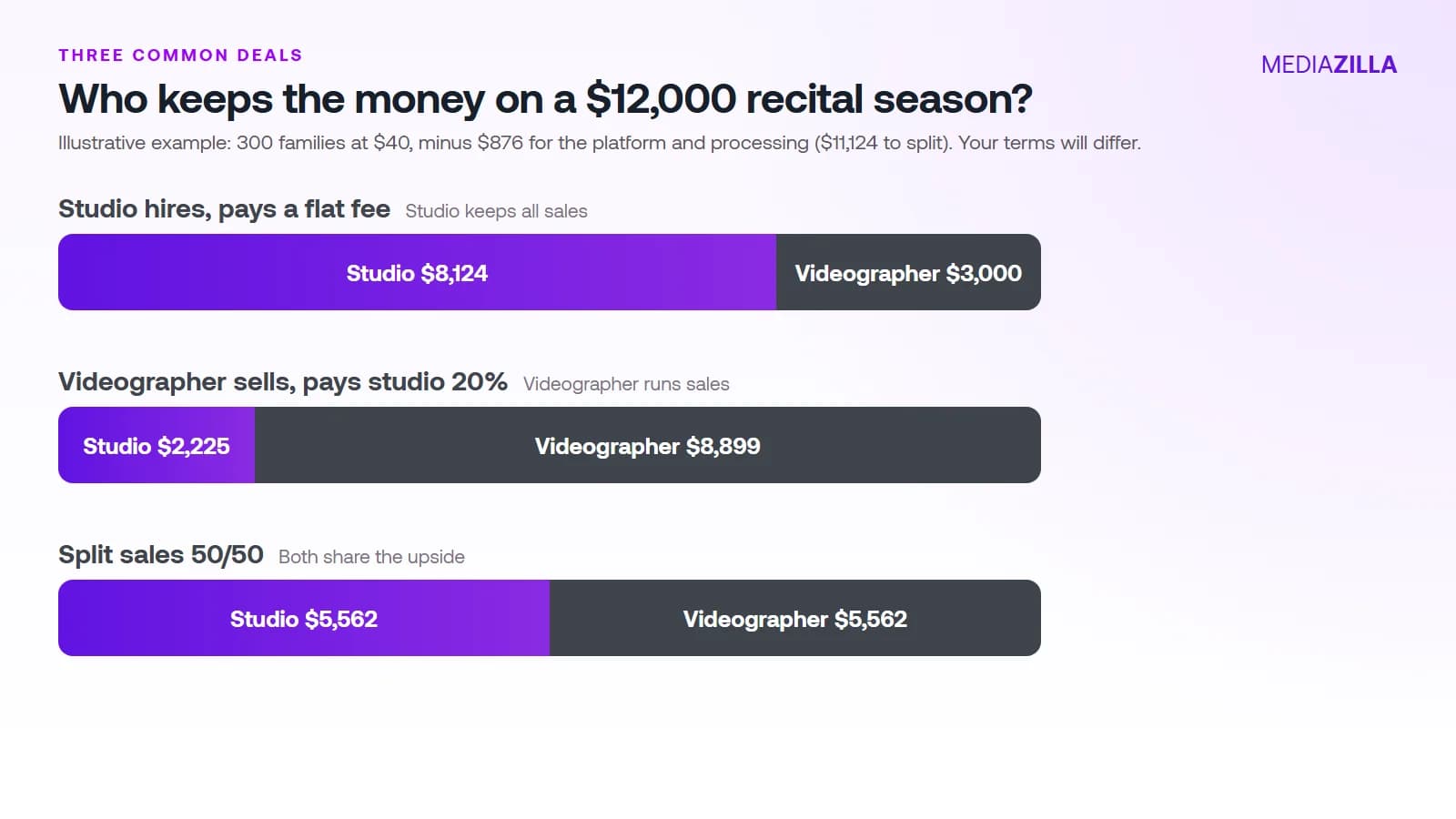
- Flat fee. Studio $8,124, videographer $3,000.
- 20% studio share. Studio $2,225, videographer $8,899.
- 50/50. Each side gets $5,562.
Notice what moves the numbers. Not the price. Not the platform. The clause. If you're setting the price, start with our guide to how much to charge for a dance recital film.
What Should You Agree in Writing First?
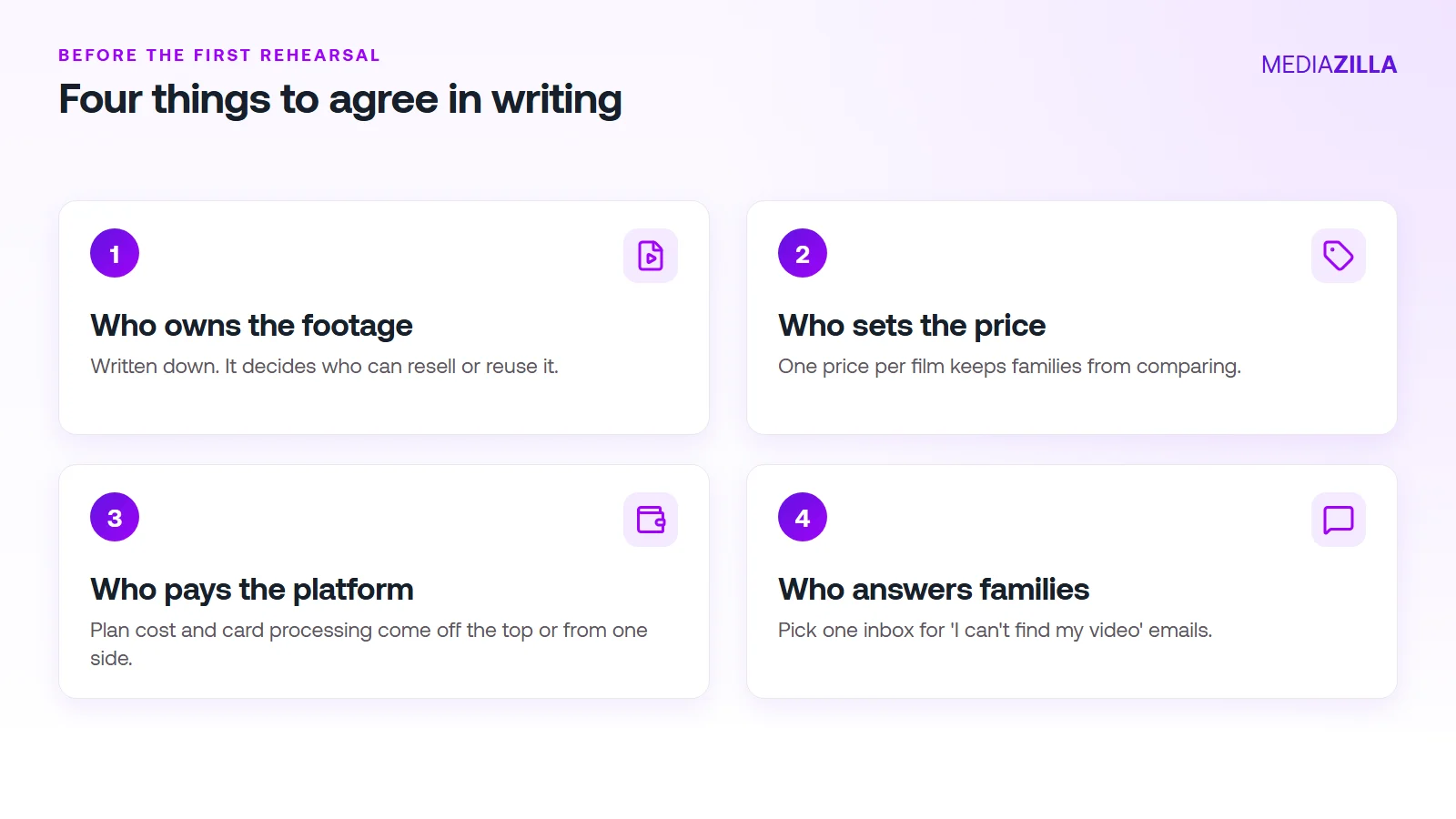
Who Owns the Footage
Say it plainly. Can the studio use clips on social media? Can the videographer use them in a reel? This isn't legal advice, so ask a lawyer for anything beyond a simple agreement.
Who Sets the Price
One price keeps families from comparing. Many studios charge $20 to $40 for lifetime access.
Who Pays the Platform
Take the plan and card processing off the top. It's the cleanest rule, and it's how the math above works.
Who Answers Families
Pick one inbox. The "I can't find my video" emails arrive the week after the show.
Which Deal Fits Which Studio?
- Large studio, 200+ families. Flat fee. The upside is big enough to justify the risk.
- Small studio, under 100 families. A share or a split. A flat fee can exceed what the sales bring in.
- Studio that wants no admin. Videographer sells and pays a share. The studio just promotes it.
- Studio that prefers predictable income. Add a video charge to tuition and skip individual sales. Some studios tack on $5 to $10 to the annual fee for this.
If you want sales before the show, read how dance schools pre-sell recital videos. And 15 ways dance schools sell recital videos has more ideas.
How Do You Deliver Without a Mess?
One link per recital. Families buy once. They watch on a phone, a laptop, or a TV app. MediaZilla charges 0% platform commission and $438 a year. Buyers keep their access even if the studio cancels its plan.
Whoever connects Stripe receives the money first and carries disputes, which cost $15 each in the US. Decide that up front, then pay the other side on a schedule. The Stripe connection guide walks through the setup. And zero-commission checkout explains why the fee line stays empty.
Stop leaving the split to chance. Start with four lines in writing. Start your MediaZilla account and sell your next recital with a clear deal behind it.
Frequently Asked Questions About Recital Video Revenue
Who should keep the money from recital video sales?
How much should a studio charge families for a recital video?
What is a fair revenue share for a videographer and a studio?
Who pays for the video platform and card processing?
Who owns the recital footage?
Can a studio add the video fee to tuition instead?
How do families get their video?
Does it matter who is the seller of record?
Featured Resource
Migrate from Vimeo On Demand before November 20
Apply for a free MediaZilla migration spot. Approved libraries move in 14 days - or we pay you $1,000.
Apply for free migration